
Attachment Style Quiz: Discover How You Connect in Relationships
Have you ever wondered why some people crave constant closeness in relationships while others need more space? Or why you keep falling into the same patterns with different partners? The answer often lies in your attachment style. An attachment style quiz is one of the simplest tools for understanding how you bond, communicate, and handle conflict in romantic relationships. It takes only a few minutes, yet the insight it gives you can change how you approach love for years to come.
Attachment theory began with the work of psychologist John Bowlby and was later expanded by Mary Ainsworth through her famous “Strange Situation” experiments. The core idea is straightforward: the way we bonded with our earliest caregivers shapes the way we connect with romantic partners as adults. While our styles can evolve over time, most people fall into one of four recognizable patterns. A good attachment style quiz helps you identify yours, so you can play to your strengths and work on your blind spots.
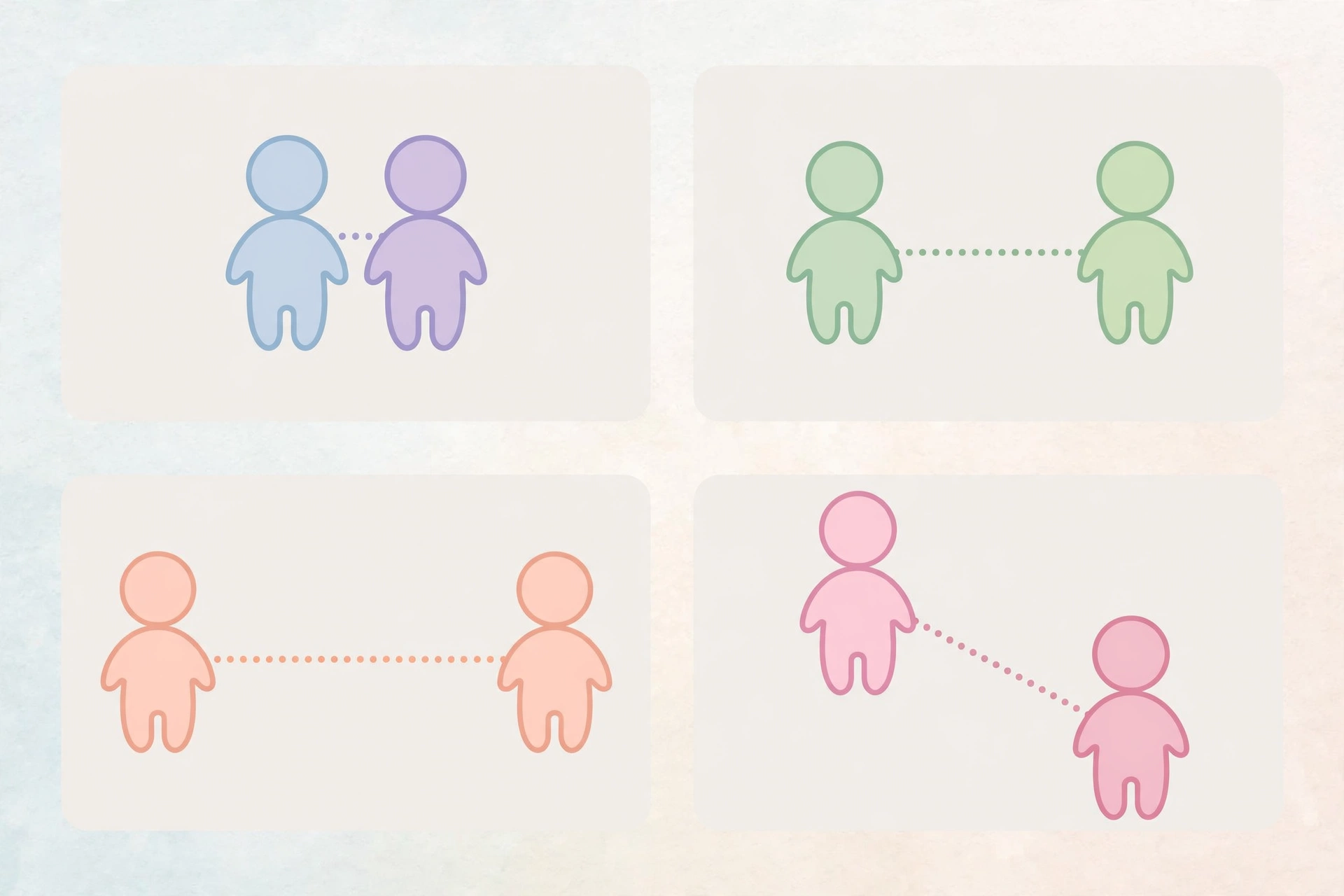
The Four Attachment Styles Explained
Before you interpret any quiz result, it helps to understand what the four styles actually look like in everyday life. Each one comes with its own strengths and challenges, and none of them is a life sentence.
1. Secure Attachment
People with a secure attachment style feel comfortable with both intimacy and independence. They trust their partners, communicate needs directly, and do not panic when a text goes unanswered for a few hours. Roughly half of adults fall into this category. Secure attachers tend to have longer, more satisfying relationships because they can give and receive love without constant fear. If this is your result, your main work is simply maintaining the healthy habits you already have.
2. Anxious Attachment
Anxiously attached people crave deep closeness and often worry about whether their partner truly loves them. They may overthink small things, like a change in tone during a phone call, and seek frequent reassurance. This style usually develops when early caregiving was inconsistent — sometimes warm, sometimes distant. The strength of anxious attachers is their emotional attunement; they notice what others feel. The challenge is learning to self-soothe instead of relying entirely on a partner for calm.
3. Avoidant Attachment
Avoidantly attached people value independence highly and can feel uncomfortable with too much emotional closeness. They may pull away when a relationship gets serious, prefer handling problems alone, and find it hard to express vulnerable feelings. This pattern often forms when early caregivers were emotionally unavailable. Avoidant attachers bring real strengths to relationships, such as calm under pressure and self-reliance. Their growth edge is learning that leaning on someone does not mean losing themselves.
4. Disorganized Attachment
Disorganized attachment, sometimes called fearful-avoidant, is a mix of anxious and avoidant tendencies. People with this style want closeness but also fear it, which can create confusing push-pull dynamics. It is the least common style and is often linked to early experiences that were frightening or unpredictable. The good news is that with self-awareness and sometimes professional support, disorganized patterns can shift significantly toward security.
For a deeper, research-backed breakdown of each style, the Simply Psychology guide to attachment styles is an excellent reference that explains the science in plain language.
How an Attachment Style Quiz Works
Most online quizzes follow a similar format. You will answer 20 to 40 statements on a scale from “strongly disagree” to “strongly agree.” The statements cover situations like:
- How you feel when your partner needs space
- Whether you find it easy to ask for help
- How quickly you trust new people
- What goes through your mind during a disagreement
- How comfortable you are saying “I love you” first
Your answers are scored across the four style dimensions, and the quiz tells you which style dominates. Some quizzes also give you a percentage breakdown, which is more honest — most of us are a blend, with one style leading.
Tips for Getting an Accurate Result
A quiz is only as good as your honesty. Keep these tips in mind:
- Answer about your general pattern, not one specific relationship. Think about how you usually act, not how you acted with one difficult ex.
- Do not overthink. Your first instinct is usually the most accurate.
- Take it when you are calm. Answering right after a fight can skew your results toward anxiety or avoidance.
- Retake it later. Attachment styles can shift with experience, so checking in once a year is a useful habit.
What to Do With Your Result
Knowing your attachment style is only useful if you act on it. Here is how each style can grow toward greater security.
If You Are Secure
Keep doing what works. The main risk for secure attachers is taking their relational skills for granted. Continue communicating openly, and consider that your steadiness can help an insecure partner feel safe — patience with a partner’s different style is one of the kindest things you can offer.
If You Are Anxious
Practice self-soothing before reaching out for reassurance. When the urge to send a third text hits, pause and ask: “What am I actually afraid of right now?” Journaling, exercise, and talking to a trusted friend can calm the nervous system. Over time, choose partners who are consistent and communicative, since reliability is the antidote to anxious spiraling.
If You Are Avoidant
Start small with vulnerability. You do not have to share your deepest secrets on date three — just practice naming feelings out loud. “I feel overwhelmed when plans change suddenly” is a complete sentence that builds intimacy. Notice the urge to withdraw and get curious about it instead of obeying it automatically.
If You Are Disorganized
Be patient with yourself. This pattern takes longer to untangle, and that is okay. Therapy — especially approaches like emotionally focused therapy — can be transformative. In daily life, focus on building one secure relationship at a time, whether romantic or platonic, and let that experience teach your nervous system that closeness can be safe.
Attachment Styles and Compatibility
One of the most common questions is whether certain styles are compatible. The classic pairing is anxious with avoidant: one pursues, the other withdraws, and both feel misunderstood. It can work, but it takes conscious effort from both sides. Two secure partners have the easiest path, while two insecure partners need the most communication.
Interestingly, attachment is only one piece of the compatibility puzzle. Understanding how you and your partner express love matters just as much. If you want to explore that side of your relationships too, our love languages test pairs perfectly with an attachment style quiz — together they give you a fuller picture of how you give and receive love.
Can Your Attachment Style Change?
Yes. This is one of the most hopeful findings in relationship psychology. Research shows that attachment styles are relatively stable but not fixed. A long, healthy relationship with a secure partner can gradually “earn” you greater security. Therapy, self-reflection, and even strong friendships can move the needle. The quiz result you get today is a starting point, not a verdict.
Many people notice their style softening in their late twenties and thirties as they gain relationship experience and emotional maturity. Life events — both good and bad — can also shift patterns. The key factor is awareness: once you can see the pattern, you can choose differently.
Frequently Asked Questions
Is an attachment style quiz scientifically accurate?
Online quizzes are screening tools, not clinical diagnoses. They are based on real psychological research and are reasonably good at identifying your dominant pattern, but they cannot capture the full complexity of your relational history. Treat the result as a useful starting point for reflection.
Which attachment style is the rarest?
Disorganized (fearful-avoidant) attachment is the least common, found in a small minority of adults. Secure attachment is the most common, followed by avoidant and then anxious, though exact percentages vary by study.
Can two anxiously attached people have a good relationship?
Yes, though it takes work. Two anxious partners often understand each other’s needs deeply, which is a strength. The challenge is that both may seek reassurance at the same time. Building individual self-soothing skills makes the partnership much smoother.
Does my attachment style affect friendships too?
Absolutely. Attachment patterns show up in friendships, family relationships, and even work dynamics. You might be secure with friends but anxious in romance, or vice versa. It is worth noticing how your style shifts across different types of relationships.
How long does it take to develop a more secure attachment?
There is no fixed timeline. Some people notice shifts within months of conscious work or therapy; for others it takes years. What matters most is consistency — small, repeated experiences of safe connection gradually rewire old patterns.
Understanding your attachment style is one of the highest-leverage things you can do for your love life. It explains the “why” behind your reactions, helps you choose better partners, and gives you a clear roadmap for growth. Take the quiz, sit with the result honestly, and remember: the goal was never a perfect label — it is a more secure, more satisfying way of connecting with the people you love.