Enneagram Instincts: The Three Subtypes Explained
Most people know their Enneagram number, but far fewer know their instinctual stacking — and the instincts often explain behavior that the core type alone cannot. Two people can share the same Enneagram type and seem strikingly different from each other. The reason usually comes down to the instincts: three deep biological drives that color how each type expresses itself in daily life. Understanding the Enneagram instincts — self-preservation, social, and sexual (one-to-one) — adds a layer of precision that transforms a decent typing into a genuinely useful one.
What Are the Enneagram Instincts?
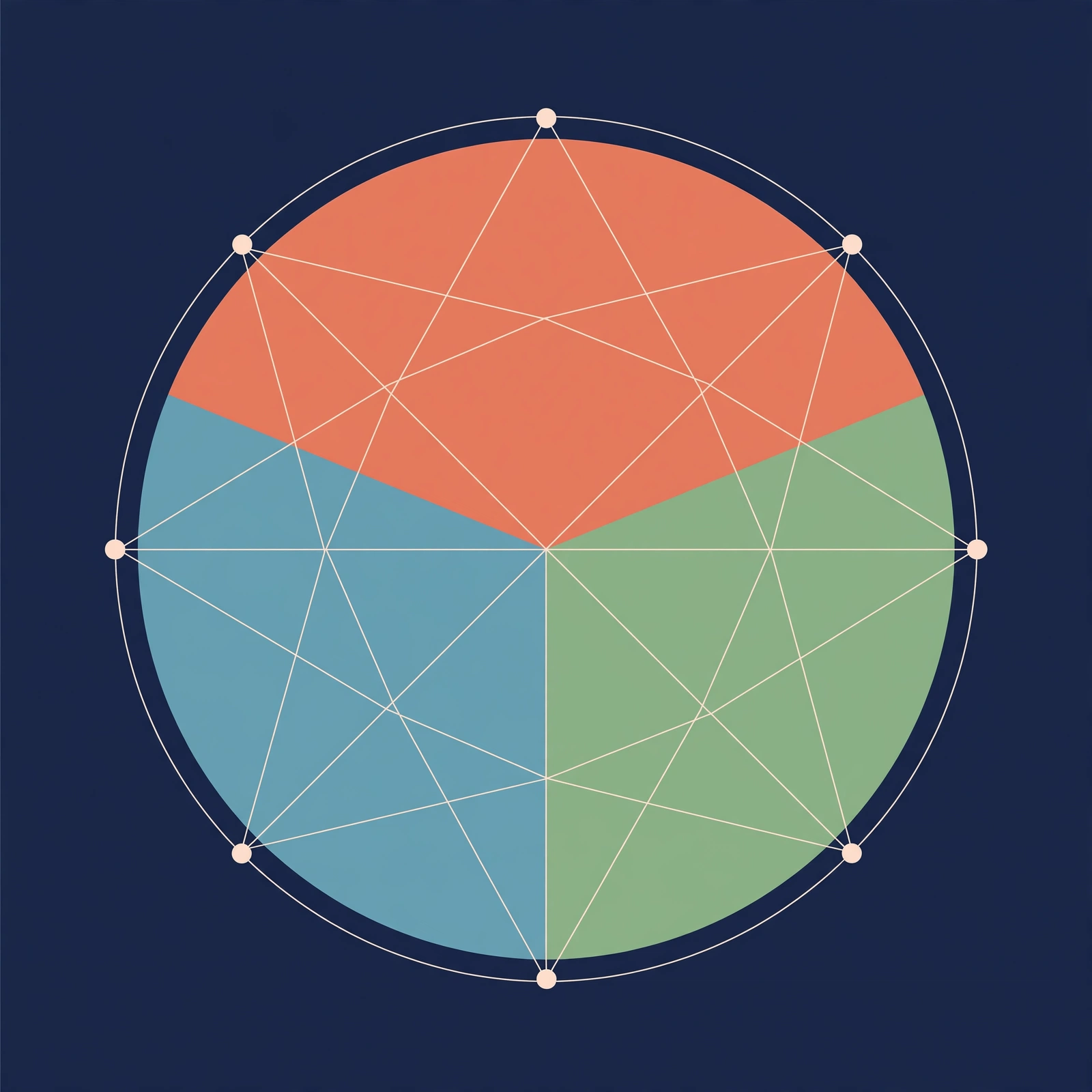
The Enneagram instincts are three primal drives rooted in human biology and survival. They operate beneath conscious choice, shaping what we pay attention to, what worries us, and what we chase. Every person has all three instincts, but we relate to each one differently: one is dominant and drives most of our decisions, one is secondary and supports the first, and one is largely neglected — the “blind spot.”
The three instincts are:
- Self-preservation (sp): Focus on physical safety, health, comfort, resources, and the home environment.
- Social (so): Focus on belonging, group participation, status, and contribution to the collective.
- Sexual, also called one-to-one (sx): Focus on intensity, chemistry, attraction, and deep bonds with specific individuals.
These three drives combine with the nine Enneagram types to create 27 distinct subtypes. Your core type is the “what” of your personality; the instincts are the “where and why” — the life arena where your type’s patterns show up most strongly.
The Self-Preservation Instinct
Self-preservation-dominant people are attuned to the practical requirements of living well and staying safe. They notice comfort levels, food, sleep, finances, health, and the condition of their physical surroundings. A self-preservation Type Four, for example, may channel their emotional intensity into creating a beautiful, orderly home, while a self-preservation Type Seven might focus on accumulating pleasant experiences, good food, and reliable creature comforts.
Common traits of self-preservation-dominant people include:
- Thinking ahead about practical needs: meals, money, shelter, health care.
- A strong relationship with the body — either careful stewardship or anxious over-monitoring.
- Preference for security and predictability in the material aspects of life.
- Energy management: knowing when to rest and when to conserve resources.
The shadow side is anxiety about survival itself. When unbalanced, self-preservation dominance can turn into chronic worry about health, hoarding of money or food, or an inability to relax even in safe circumstances.
The Social Instinct
Social-dominant people are tuned to the group: belonging, roles, hierarchies, culture, and the health of the community. They instinctively notice who is included, who leads, what the unwritten rules are, and how they can contribute. A social Type Eight may fight for justice on behalf of a community rather than dominating individuals, while a social Type Nine works to keep group harmony and often becomes the glue holding relationships together.
Typical social-instinct patterns include:
- Seeking meaningful roles within teams, families, organizations, or movements.
- Sensitivity to status, reputation, and how one is perceived by the group.
- Energy directed toward causes, friendships networks, and shared projects.
- Noticing social dynamics that others miss — who’s comfortable, who’s on the outside.
At its worst, the social instinct produces people-pleasing, status anxiety, and self-sacrifice to group demands. At its best, it produces genuine community builders and wise facilitators.
The Sexual (One-to-One) Instinct
The sexual instinct has nothing to do with romance alone; it is the drive toward intensity, merging, and energetic connection. Sexual-dominant people seek chemistry — in relationships, in ideas, in creative work. They want to be fully “in it,” whether that’s a deep conversation, an all-consuming project, or a passionate bond with one other person. A sexual Type Five might pour obsessive focus into a single field of mastery, while a sexual Type Two seeks to become the indispensable person in a partner’s life.
Hallmarks of the sexual instinct include:
- A radar for attraction, chemistry, and “aliveness” in people and experiences.
- Intensity: going deep rather than wide.
- Willingness to take risks — emotional, creative, or even physical — for what captivates them.
- Idealization followed by possible disillusionment when reality falls short.
The challenge is sustainability: intensity is thrilling but exhausting, and sexual-dominant people can burn out relationships and themselves by demanding constant peak experiences.
Instinctual Stacking: How the Three Combine
Because everyone has all three instincts in a personal hierarchy, there are six possible stackings:
- sp/so — Self-preservation dominant, social second, sexual blind spot
- sp/sx — Self-preservation dominant, sexual second, social blind spot
- so/sp — Social dominant, self-preservation second, sexual blind spot
- so/sx — Social dominant, sexual second, self-preservation blind spot
- sx/sp — Sexual dominant, self-preservation second, social blind spot
- sx/so — Sexual dominant, social second, self-preservation blind spot
Your dominant instinct is usually obvious once you know what to look for: it’s where your mind goes when you’re not trying, and where most of your anxiety gathers. The blind spot is equally telling — it’s the area of life you chronically neglect or handle awkwardly. A person with a social blind spot, for instance, may genuinely forget to maintain friendships or misread group politics, while someone with a self-preservation blind spot might skip meals, run on fumes, and ignore a mounting pile of bills.
Identifying your stacking typically clarifies your type as well. Many mistypings dissolve once the subtype is understood — the counterintuitive behaviors that made the core type feel “not quite right” often belong to the instincts, not the type.
The 27 Subtypes in Brief
Each of the nine types expresses itself differently through each instinct. Here is a quick sketch of how subtypes vary:
- Type One subtypes: Self-preservation Ones manage themselves with strict discipline; social Ones model ideal behavior for the group; sexual Ones channel their reforming zeal toward an intimate partner or cause.
- Type Two subtypes: Self-preservation Twos earn love through caretaking and privilege; social Twos serve influential people and causes; sexual Twos pursue intense, seductive bonds.
- Type Three subtypes: Self-preservation Threes chase security and achievement; social Threes perform for prestige; sexual Threes seek admiration through desirability and chemistry.
- Type Four subtypes: Self-preservation Fours are the most reserved and stoic; social Fours compare themselves with the group and feel shame openly; sexual Fours are the most emotionally volatile and competitive.
- Type Five subtypes: Self-preservation Fives retreat into a private, well-ordered sanctuary; social Fives trade in ideas with chosen circles; sexual Fives merge with one trusted person or one consuming interest.
- Type Six subtypes: Self-preservation Sixes seek warm allies and safety nets; social Sixes follow rules and duty to belong; sexual Sixes confront fear head-on with intensity.
- Type Seven subtypes: Self-preservation Sevens curate comfort and pleasant networks; social Sevens sacrifice for the group’s fun; sexual Sevens chase idealized, thrilling experiences.
- Type Eight subtypes: Self-preservation Eights dominate their territory to secure it; social Eights protect the pack and lead communities; sexual Eights are the most intense and possessive.
- Type Nine subtypes: Self-preservation Nines seek comfort and routine; social Nines merge with group needs; sexual Nines merge with a partner’s world.
These are simplifications, but they show how powerfully the instincts reshape each type’s surface behavior while the core motivation stays the same.
How to Find Your Dominant Instinct
Ask yourself three questions and answer honestly:
- When life gets stressful, what do you protect first? Your body and resources, your standing with people, or your closest bonds and passions?
- What keeps you up at night? Health and money worries point to self-preservation; exclusion and reputation worries point to social; worries about a relationship’s intensity or a creative pursuit point to sexual.
- What do you habitually neglect? The area you let slide is usually your blind spot, which reveals the other two as dominant and secondary.
Observing yourself for a week is more reliable than any quick quiz. Notice where your attention drifts when you’re idle, what conversations energize you, and what advice you give friends — we tend to coach others on our own dominant instinct’s priorities.
Why the Instincts Matter for Growth
The instincts explain why generic type advice sometimes misses. A self-preservation Type Four and a sexual Type Four need different growth strategies: one must loosen their grip on comfort and routine, the other must learn to sustain calm instead of chasing emotional peaks. Knowing your subtype lets you aim personal development at the real pressure point rather than the average of the type.
The instincts also improve relationships. Much friction between two people comes not from clashing types but from clashing instinctual priorities — one partner optimizing for security while the other optimizes for intensity, each puzzled by the other’s choices. Naming the instincts turns that confusion into a conversation.
For a deeper look at how personality shifts under pressure and opens up in growth, explore our guide to Enneagram stress and growth, which maps the movement of each type along the Enneagram’s arrows.
Frequently Asked Questions
Can my instinctual stacking change over time?
The stacking itself is considered stable, but the balance can shift with life circumstances. A new parent may temporarily lead with self-preservation, or a career change may foreground the social instinct. The underlying hierarchy usually reasserts itself once circumstances stabilize.
What is the difference between the sexual instinct and being romantic?
The sexual instinct is about intensity and merging, not romance per se. It can show up in work obsessions, creative flow, competitive drive, or deep platonic bonds. Romance is just one arena where intensity can play out.
Which instinct stacking is the most common?
There is no reliable population-wide data, and teachers generally avoid claiming one stacking is most common. What matters is your own hierarchy, not how frequent it is.
Can I have two dominant instincts?
No — the model describes a strict hierarchy. You have one dominant, one secondary, and one blind spot. If two feel equally strong, that usually means one is genuinely dominant and the other is your secondary operating in high gear.
How do the instincts relate to Enneagram wings?
They are separate layers. Your wing modifies your type from the side (the neighboring number), while your instincts determine which life arena your type’s patterns concentrate in. Both refine the core type, and both are worth knowing.
Where can I learn the classic theory behind the instincts?
The traditional framework of the three instincts and their 27 subtypes is documented in detail by The Enneagram Institute, whose type descriptions and subtype material remain the most widely referenced source in the field.