Enneagram Type 2: The Helper — Traits, Strengths, and Growth
Every group has one: the person who remembers your birthday, notices when you’re quiet, and shows up with soup before you even ask. In the Enneagram system, that person is very often a Type 2 — the Helper. Warm, generous, and deeply people-focused, Twos are driven by love and connection, and they express it the most practical way they know: by taking care of everyone around them.
But the Helper’s generosity has a hidden side. In this guide, we’ll unpack what truly motivates Enneagram Type 2, the strengths that make Twos the emotional heart of every community, the struggles that arise when giving goes too far, how the two wings shape the type, and what healthy growth looks like for a Two. Whether you are a Two yourself or you love one, this is the full, honest picture.
The Core Motivation of Enneagram Type 2
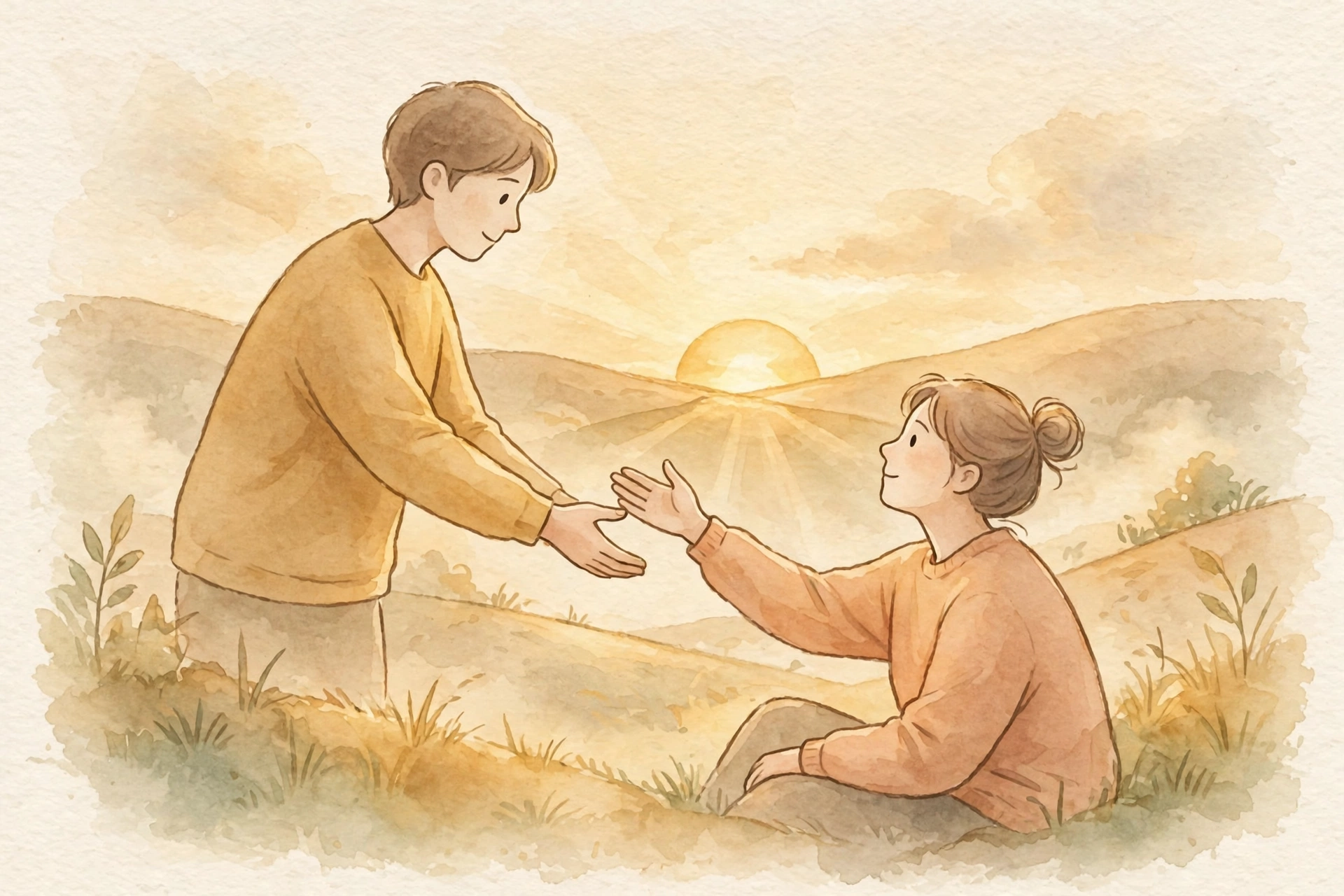
The Enneagram maps motivation, not just behavior — and the Two’s motivation is love. The basic fear of Type 2 is being unwanted or unworthy of being loved. Their basic desire is the direct answer to that fear: to feel loved, deeply and unconditionally.
This plays out as a set of key motivations: to be loved, to express their feelings for others, to be needed and appreciated, and to get others to respond to them. Where some types earn love through achievement or loyalty, Twos earn it through giving. Their unconscious logic runs something like this: if I am indispensable to the people I love — if they need me — they will never leave me. It is a strategy born of genuine warmth, but it quietly makes the Two’s sense of worth dependent on being needed.
Key Personality Traits of Type 2
Twos share a warm, recognizable pattern. See how many of these fit the Helper in your life:
- Empathetic and warm-hearted. Twos tune into other people’s feelings almost automatically — they often know you’re upset before you do.
- Generous with time and attention. They’ll drive across town, stay up late, or rearrange their schedule to help someone they care about.
- People-pleasing. Twos work hard to be liked, offering flattery, favors, and emotional support — sometimes more than the situation calls for.
- Relationship-focused. People are the Two’s whole world; achievements and ideas matter far less than connection.
- Attentive to details about others. They remember your spouse’s name, your coffee order, and the story you told three months ago.
- Reluctant to acknowledge their own needs. Ask a Two what they need and you’ll often get a blank look — they’ve spent so long focused outward that their own needs feel foreign.
- Possessive under stress. When insecure, Twos can hover, cling, or try to make others dependent on them — love expressed as control.
- Proud of their helpfulness. The Two’s hidden vice is pride: a quiet certainty that they know what everyone needs better than anyone else does.
The Strengths of the Helper
Healthy Twos are pure warmth. Their greatest strength is genuine, other-centered love: they see the good in people, often before people see it in themselves, and they have an almost unlimited capacity for encouragement. Friends of Twos describe feeling truly seen — not for what they achieve, but for who they are.
Twos are also remarkably practical in their caring. They don’t just sympathize; they act. They organize the meal train, remember the follow-up call, and do the unglamorous work of looking after people. This makes them the backbone of families, communities, and workplaces — the ones who hold the social fabric together. They’re expressive, appreciative, and generous with praise, which means people around a healthy Two tend to bloom.
At their best, Twos are unselfish and altruistic in the truest sense — giving freely without keeping score, and finding genuine joy in the happiness of others.
Common Struggles and Blind Spots
The Helper’s shadow appears when giving becomes a strategy for earning love rather than an expression of it:
- Neglecting their own needs. Twos are famous for running on empty — skipping rest, meals, and medical care while exhausting themselves for others.
- Hidden expectations. The giving often comes with invisible strings: “After everything I’ve done…” When appreciation doesn’t arrive, resentment builds.
- Difficulty receiving. Compliments deflect off Twos; accepting help feels almost painful. They can give endlessly but can’t take.
- Intrusiveness. The Two’s radar for others’ needs can become meddling — offering help nobody asked for and advice nobody wanted.
- Manipulation through guilt. At lower levels of health, Twos may remind others of their sacrifices to secure love and loyalty — a painful pattern for everyone involved.
- Identity fused with helping. When no one needs them, Twos can feel worthless and lost, because “helper” is the only role they know.
These patterns don’t make Twos bad people — they make them human. The giving itself is beautiful; the work is learning to give from fullness rather than from hunger.
Type 2 Wings: 2w1 and 2w3
Each Enneagram type takes on flavor from a neighboring wing, and the Two’s two options create distinctly different Helpers.
2w1 — “The Servant”
The Two with a One wing blends the Helper’s warmth with the Reformer’s conscience. These Twos serve out of principle as much as affection — they’re drawn to causes, volunteering, and moral duty. More restrained and idealistic than the average Two, 2w1s can be quietly self-critical, holding themselves to high standards of selflessness. Their challenge is softening the inner critic and accepting that they, too, are allowed to have needs.
2w3 — “The Host/Hostess”
The Two with a Three wing mixes caring with the Achiever’s social sparkle. These are the charismatic, energetic Helpers — the life of the party who also makes sure everyone has a drink and feels included. 2w3s are more image-conscious and adaptable than 2w1s, thriving in social and professional settings. Their challenge is slowing down enough to distinguish genuine connection from performance.
Enneagram Type 2 in Relationships
As partners, Twos are devoted, affectionate, and endlessly attentive. They’ll learn everything about you — your dreams, your fears, your favorite foods — and pour themselves into making you happy. A relationship with a healthy Two feels like being cherished. The risk is codependency: the Two may lose themselves in the partnership, then feel hurt when their sacrifices go unnoticed. The healthiest Two relationships are those where the Two is loved for who they are, not just for what they provide.
As friends, Twos are the ones who check in, remember the hard anniversaries, and celebrate your wins like their own. As parents, they tend to be nurturing, involved, and deeply invested — sometimes needing to learn to let their children struggle a little rather than rescuing them every time.
It helps to contrast the Helper’s active, giving energy with the calmer neighboring styles on the Enneagram. If someone in your life brings peace through steady presence rather than through doing things for you, that may be a different pattern entirely — our guide to Enneagram Type 9 – The Peacemaker explores that calm, harmony-seeking personality in depth.
Enneagram Type 2 at Work
Twos shine in people-centered roles: nursing, teaching, counseling, human resources, hospitality, customer success, and nonprofit work. They’re the colleagues who mentor newcomers, organize the team celebrations, and notice when someone is struggling before management does. Their emotional intelligence makes them natural connectors and morale-builders.
Their workplace pitfalls are the familiar ones: overcommitting, saying yes to everything, avoiding necessary confrontation, and tying their professional worth to being liked. Twos do best with managers who recognize their contributions explicitly — appreciation is fuel for a Two — and who help them set boundaries around their time and energy.
The Growth Path for Type 2
Enneagram theory gives each type a direction of growth and a direction of stress. For Twos, growth means moving toward the healthy qualities of Type Four: becoming more self-nurturing and emotionally honest — learning to turn the same tender attention inward that they so freely give outward. Under stress, Twos can slide toward the aggressive, dominating qualities of Type Eight, trying to control the people they feel are withholding love.
Practical growth steps for a Two include:
- Ask what you need. Before offering help, pause and check in with yourself. Name one need of your own every day — even a small one.
- Let people say no. Offer help, then genuinely accept a refusal. Someone declining your help is not rejecting you.
- Receive graciously. When someone compliments or helps you, say thank you and stop there. Don’t deflect, don’t immediately reciprocate.
- Notice your motives. When you’re about to do something nice, ask honestly: am I doing this freely, or am I buying love? Both answers are okay — awareness is the point.
- Rest without guilt. Taking care of yourself isn’t selfish; it’s what makes sustainable generosity possible. You can’t pour from an empty cup.
For the official extended description of this type, including levels of development and detailed growth recommendations, see The Enneagram Institute’s official Type Two overview.
Frequently Asked Questions
What is the basic fear of Enneagram Type 2?
The basic fear of Type 2 is being unwanted or unworthy of being loved. This fear drives their lifelong pattern of giving, helping, and making themselves indispensable to the people they care about.
What is the difference between 2w1 and 2w3?
The 2w1 (“The Servant”) is more principled, restrained, and duty-driven, blending helping with the One wing’s moral seriousness. The 2w3 (“The Host/Hostess”) is more outgoing, adaptable, and socially polished, mixing care with the Three wing’s charm and energy.
Are Enneagram 2s manipulative?
Healthy Twos are genuinely generous with no strings attached. But at average to unhealthy levels, Twos can become unconsciously manipulative — giving with hidden expectations, then using guilt when those expectations aren’t met. The key difference is awareness: healthy Twos notice their motives and own them.
What careers are best for Type 2?
Twos thrive in caring, people-focused roles: healthcare, teaching, counseling, social work, hospitality, human resources, and nonprofit leadership. They struggle most in isolated, purely technical, or cutthroat competitive environments.
How can a Type 2 grow?
The core growth work for Twos is turning their compassion inward: acknowledging their own needs, setting boundaries, learning to receive, and giving from genuine generosity rather than from a hunger to be needed. A healthy Two helps because they want to, not because they must.
How does a Type 2 handle conflict?
Twos dislike conflict because it threatens the connection they depend on. They tend to smooth things over with affection, accommodation, or changing the subject — but avoiding honest disagreement usually stores up resentment. Growth means learning that a real relationship can survive an honest “no.”