DISC Personality Test: The Complete Guide to Your Four Styles
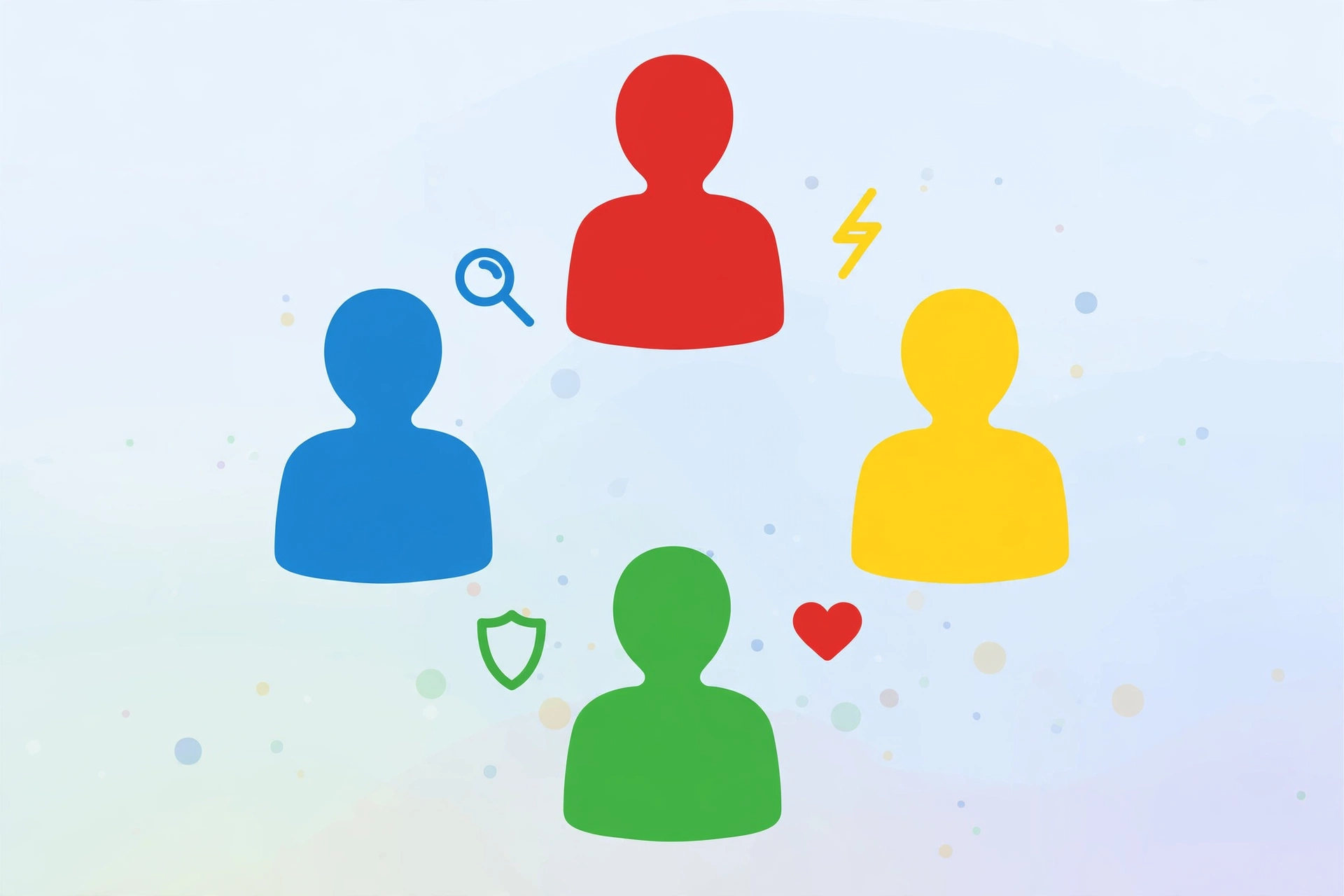
Have you ever wondered why some people charge straight at a problem while others pause, reflect, and gather every detail before acting? The disc personality test offers one of the clearest frameworks for understanding these everyday differences. Built on decades of behavioral research, the DISC model sorts people into four primary styles — Dominance, Influence, Steadiness, and Conscientiousness — and shows how each style communicates, makes decisions, and handles stress.
Whether you are preparing for a team workshop, exploring a career change, or simply curious about what makes the people around you tick, understanding your DISC style can change the way you work and relate to others. This guide walks you through everything: what the four styles mean, how the test works, what your results tell you, and how to actually use them.
What Is the DISC Personality Test?
The disc personality test is a behavioral assessment that measures your preferences across four quadrants of personality. Unlike tests that try to label who you are deep down, DISC focuses on what you do — your observable behavior in work and social situations. That makes it especially practical for teams, managers, and couples who want a shared language for their differences.
The model traces back to psychologist William Moulton Marston, who described four behavioral styles in his 1928 book Emotions of Normal People. Modern versions of the assessment — most notably the Everything DiSC suite from Wiley — have refined the model with rigorous research and millions of completed profiles. If you want the research-backed version, the official Everything DiSC assessment is the gold standard used by organizations worldwide.
Most DISC tests ask you to rank or rate statements about your typical behavior (“I prefer to take charge,” “I enjoy meeting new people,” “I value accuracy”). Your answers place you on a map of the four styles, with most people showing a blend — a primary style plus one or two secondary influences.
The Four DISC Styles Explained
D — Dominance
D-style individuals are direct, decisive, and driven by results. They focus on the bottom line, embrace challenges, and prefer to move fast rather than wait for consensus.
- Priorities: Efficiency, action, results
- Strengths: Problem-solving, confidence, decisiveness
- Stressors: Being micromanaged, slow decisions, inefficiency
- Communication style: Brief, direct, focused on outcomes
A classic D in a meeting says, “What’s the goal, and who’s doing it by Friday?” They may come across as blunt, but their intent is usually just momentum.
i — Influence
The i style is outgoing, enthusiastic, and people-oriented. Influence types thrive on interaction, optimism, and recognition — they are often the ones who light up a room.
- Priorities: Relationships, enthusiasm, collaboration
- Strengths: Persuasion, optimism, networking
- Stressors: Rejection, routine, being ignored
- Communication style: Expressive, fast-paced, story-driven
An i-style colleague will pitch an idea with energy and charm, sometimes glossing over details. They need social connection like oxygen.
S — Steadiness
S types are calm, supportive, and dependable. They value cooperation, sincerity, and dependability, and they are usually the steady hands that keep teams running smoothly.
- Priorities: Harmony, stability, support
- Strengths: Patience, listening, loyalty
- Stressors: Sudden change, conflict, time pressure
- Communication style: Warm, measured, considerate
Steadiness people are the ones who remember birthdays, defuse arguments, and quietly make sure everything gets done. They dislike being rushed into decisions.
C — Conscientiousness
C-style individuals are analytical, precise, and quality-focused. They care about accuracy, logic, and well-reasoned plans — the engineers of the DISC world.
- Priorities: Accuracy, expertise, quality
- Strengths: Analysis, organization, systematic thinking
- Stressors: Sloppy work, emotional decisions, ambiguity
- Communication style: Detailed, logical, reserved
A C type would rather delay a launch than ship something flawed. Ask them for data, give them space to think, and you will get a thorough answer.
How the DISC Test Works
A typical disc personality test takes about 10 to 20 minutes. You respond to a series of statements by choosing which is most or least like you, or by rating your agreement on a scale. There are no right or wrong answers — the goal is to capture your natural behavioral tendencies, not to reward a “correct” profile.
Your results usually arrive as:
- A primary style — the quadrant where you score highest (for example, a “high i”).
- A style blend — most people combine two styles, like “Di” (Dominance with Influence) or “SC” (Steadiness with Conscientiousness).
- A placement on the DISC circle — a visual map showing how far toward the edge (intensity) your dot falls.
- Behavioral insights — tailored descriptions of your motivators, stressors, and communication needs.
The most reliable assessments, like the ones used in corporate training, also include an adaptation section: how your natural style differs from the style you show under pressure. That gap is often the most revealing part of the report.

What Your DISC Results Actually Tell You
It is easy to take a quiz, nod at the description, and move on. The real value of the disc personality test is in application. Here is what each part of your report can teach you:
Self-awareness
Your profile highlights blind spots you may not notice. A high D might learn that their directness reads as impatience; a high S might see that avoiding conflict lets small problems grow. Awareness is the first step to adjusting.
Communication
Once you know someone’s style, you can adapt. With a D, lead with the conclusion. With an i, bring energy and stories. With an S, show sincerity and give time. With a C, bring the data and skip the hype. These small shifts prevent most workplace friction.
Teamwork
Great teams are usually style-diverse: D’s push for results, i’s energize, S’s support, and C’s ensure quality. When a team understands its mix, it can assign roles that play to strengths instead of fighting over them.
Leadership and management
Managers use DISC to tailor their approach — giving D’s autonomy, recognizing i’s publicly, supporting S’s through change, and respecting C’s need for precision. One-size-fits-all management fails because people are not one size.
If you enjoy trait-based frameworks, you may also like the 16 personalities test, which maps 16 cognitive types instead of four behavioral styles — a fascinating complement to your DISC results.
DISC vs. Other Personality Tests
How does DISC compare to the other assessments you have heard of? Each has a different purpose:
- DISC measures observable behavior and communication style — best for workplace dynamics and teamwork.
- MBTI / 16 personalities measures cognitive preferences and inner motivations — best for self-understanding and career fit.
- Enneagram explores core fears and desires — best for deep personal growth.
- Big Five is the academic research standard for trait psychology — best for scientific validity.
None is “better” in absolute terms; they answer different questions. Many coaches recommend pairing DISC with a second framework, because behavior (DISC) and inner motivation (Enneagram or 16 personalities) tell you complementary things about the same person.
Common Myths About the DISC Test
Myth 1: “One style is better than the others”
All four styles bring essential strengths. Organizations fail when they overvalue one style — for example, hiring only D’s creates a culture of conflict, while hiring only S’s can stall decisions.
Myth 2: “Your DISC type never changes”
Your core style is relatively stable, but behavior adapts. A high i can learn to be more detail-oriented; a high C can learn to speak up faster. The test measures tendencies, not destiny.
Myth 3: “DISC can tell you who to hire”
DISC describes behavior, not competence or integrity. Used as a hiring filter it becomes discriminatory and unscientific. Its legitimate use is development: onboarding, coaching, and team building after someone is hired.
Myth 4: “You are only one letter”
Almost nobody is a pure style. Most profiles are blends — “Si,” “DC,” “iS” — and the combinations create far more nuance than the four labels alone.
How to Use Your DISC Profile in Daily Life
- Share your results with your team. A 30-minute conversation where everyone shares their style prevents months of misunderstanding.
- Adapt your emails. Keep them short for D’s, warm for i’s, considerate for S’s, and detailed for C’s.
- Prepare for difficult conversations. Knowing someone’s stressors helps you frame feedback in a way they can hear.
- Choose roles that fit. A high C thrives in quality control; a high i thrives in client-facing roles. Alignment beats willpower.
- Revisit your profile yearly. Life events and new roles shift your behavior — retaking the test keeps your self-awareness current.
Frequently Asked Questions
Is the disc personality test free?
Free versions exist online and can be fun introductions, but they vary widely in quality. The validated, research-backed assessments used by employers are paid products. If results will influence coaching or team decisions, invest in a validated version.
How accurate is the DISC test?
Well-validated DISC assessments show strong reliability — people generally get consistent results when they retake them. Accuracy depends on honest answers: responding as you wish you behaved distorts the profile. Answer as your natural self, not your ideal self.
How long does the DISC test take?
Most versions take 10 to 20 minutes to complete, and you receive your report immediately afterward. Deeper versions with team-comparison features may take a little longer.
Can DISC predict job performance?
Not on its own. DISC predicts behavioral tendencies — how someone communicates, decides, and reacts to stress — not skill, intelligence, or work ethic. It is best used for development, coaching, and team dynamics rather than selection.
What is the rarest DISC style?
Rarity depends on the population studied, but in most workplace samples, pure high-D profiles are the least common, while blends involving S and C are the most frequent. Remember that blends, not pure styles, are the norm.