True Colors Personality Test: The Complete Free Guide for 2026
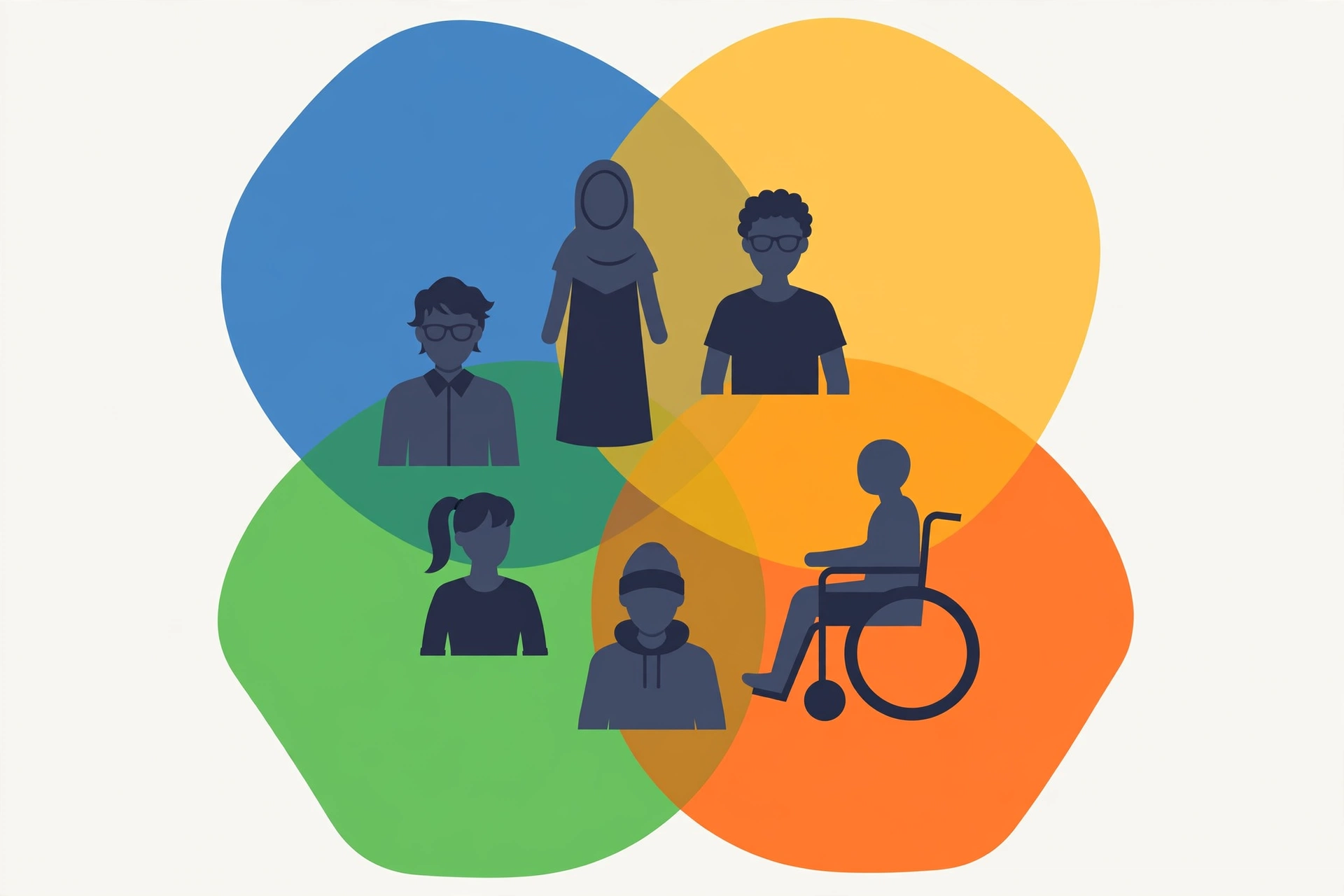
If long questionnaires make your eyes glaze over, the true colors personality test might be the personality tool you’ve been waiting for. Instead of 100 questions and 16 types, it sorts you into four easy-to-remember colors — Blue, Gold, Green, and Orange — each representing a distinct personality style. Simple, visual, and surprisingly insightful, the true colors personality test is a favorite in schools, workplaces, and team-building workshops. This guide covers what each color means, how the test works, and how to use your color in everyday life.
What Is the True Colors Personality Test?
The true colors personality test is a personality assessment that classifies people into four color-coded temperament types. It was developed by Don Lowry in the late 1970s, building on the temperament theories of David Keirsey (who himself built on Myers-Briggs and Jung).
The core idea is beautifully simple: most people have one dominant color, one secondary color that strongly influences them, and two less-dominant colors. Your color combination describes your motivations, communication style, values, and stress behaviors.

Unlike tests that take 20 minutes, the true colors personality test can be completed in about 5 minutes — you simply rank groups of words or statements by how well they describe you. That speed is exactly why it’s so popular for classrooms, corporate training, and quick team exercises.
The 4 True Colors Personality Types Explained
Blue — The Relational Helper
Core need: To be understood and appreciated.
Core value: Authenticity and harmony.
Blues are warm, empathetic, and people-focused. They care deeply about relationships, sincerity, and making others feel valued. A Blue friend remembers your birthday, notices when you’re upset before you say a word, and would rather have an honest conversation than a surface-level one.
- Strengths: Empathy, communication, compassion, intuition about people, peacemaking.
- At work: Natural counselors, teachers, nurses, HR professionals, and team nurturers.
- Stress behavior: When stressed, Blues can become overly emotional, take things personally, or withdraw to protect their feelings.
- What motivates them: Meaningful relationships, appreciation, and the chance to help others grow.
Gold — The Responsible Planner
Core need: To belong and do things the right way.
Core value: Responsibility and tradition.
Golds are organized, dependable, and detail-oriented. They respect rules, honor commitments, and believe there’s a right way to do things. If you need someone to plan the wedding, manage the budget, or make sure nothing falls through the cracks — find a Gold.
- Strengths: Organization, reliability, punctuality, thoroughness, loyalty.
- At work: Excellent administrators, accountants, project managers, and operations people.
- Stress behavior: Under stress, Golds can become rigid, critical, or anxious about disorder and last-minute changes.
- What motivates them: Stability, clear expectations, recognition for their diligence, and belonging to something respectable.
Green — The Analytical Thinker
Core need: To understand and be competent.
Core value: Knowledge and logic.
Greens are independent, analytical, and endlessly curious. They live in the world of ideas, systems, and “why.” A Green would rather be right than liked, and they’d rather read the manual than ask for directions. Small talk bores them; deep analysis energizes them.
- Strengths: Logic, problem-solving, innovation, strategic thinking, calm under pressure.
- At work: Natural engineers, researchers, analysts, software developers, and strategists.
- Stress behavior: When stressed, Greens can become detached, overly critical, or dismissive of emotions (their own and others’).
- What motivates them: Intellectual challenge, autonomy, competence, and the freedom to explore ideas.
Orange — The Spontaneous Adventurer
Core need: To act and have impact now.
Core value: Freedom and fun.
Oranges are energetic, spontaneous, and hands-on. They live in the moment, love excitement, and learn by doing rather than reading. An Orange is the friend who suggests the road trip, tries the new sport, and turns an ordinary Tuesday into an adventure.
- Strengths: Energy, adaptability, courage, practical skills, charisma, crisis response.
- At work: Great in sales, emergency services, entertainment, entrepreneurship, and skilled trades.
- Stress behavior: Under stress, Oranges can become impulsive, reckless, or rebellious against rules they find pointless.
- What motivates them: Freedom, variety, hands-on action, and immediate results.
How to Take the True Colors Personality Test Online
The true colors personality test is one of the quickest assessments you’ll ever take. Here’s how it typically works:
- Rank word groups. You’re shown several sets of four words or phrases (for example: “compassionate / organized / logical / adventurous”). Rank them from most like you (4) to least like you (1).
- Add up your columns. Each column corresponds to a color. Your highest total is your dominant (primary) color; your second-highest is your secondary color.
- Read your color profile. Your primary color describes your core personality; your secondary color adds important nuance. Most people are a “bright” blend, like Blue-Green or Gold-Orange.
Tips for an Accurate Result
- Go with your gut. Rank quickly — your first instinct is usually the truest.
- Answer as yourself, not your role. Don’t answer as “employee me” or “parent me.” Answer as the real you.
- There’s no ideal color. Every color has strengths and blind spots. Don’t rank toward the color you admire; rank toward the color you are.
- Note close scores. If two colors tie or nearly tie, you’re a genuine blend — and that’s completely normal.
True Colors vs. Myers-Briggs: What’s the Difference?
People often ask how the true colors personality test compares to MBTI, since both come from similar roots. Here’s the quick comparison:
| True Colors | Myers-Briggs (MBTI) | |
|---|---|---|
| Types | 4 colors | 16 types |
| Time to take | ~5 minutes | ~10–15 minutes |
| Granularity | Broad strokes | Much more detailed |
| Best for | Quick team exercises, classrooms, icebreakers | Deeper self-analysis, career planning |
| Memory | Easy — everyone remembers their color | Harder — 16 four-letter codes |
The two systems map onto each other loosely: Blues overlap with Feeling types (especially NF), Golds with Sensing-Judging types (SJ), Greens with Intuitive-Thinking types (NT), and Oranges with Sensing-Perceiving types (SP). Many people enjoy taking both — True Colors for the quick snapshot, MBTI for the deep dive.
Using Your True Color at Work
The true colors personality test shines brightest in workplace settings, which is why so many companies use it for team building:
- Communication: Speak to Blues with warmth and appreciation, Golds with clear plans and details, Greens with logic and data, and Oranges with energy and bottom-line impact.
- Meetings: Golds want an agenda sent in advance. Greens want the reasoning behind decisions. Oranges want meetings short and action-focused. Blues want everyone heard.
- Feedback: Blues need encouragement with critique; Golds respect straightforward, specific feedback; Greens want logical reasoning; Oranges respond to quick, direct, no-drama feedback.
- Leadership: The best leaders flex their color — a Green manager learns to show appreciation (Blue), a Gold manager learns to tolerate some chaos (Orange).
Hiring and team design: Diverse-color teams outperform same-color teams because each color covers the others’ blind spots. A team of all Greens analyzes brilliantly but may forget the human side; adding Blues and Oranges balances it.
True Colors in Relationships and Family Life
Your color shapes how you love and live with others:
- Blues show love through words, affection, and deep conversation. They need to feel emotionally connected.
- Golds show love through reliability, traditions, and taking care of practical needs. They need to feel respected and secure.
- Greens show love through loyalty, problem-solving, and sharing ideas. They need intellectual respect and personal space.
- Oranges show love through fun, spontaneity, and shared adventures. They need freedom and excitement.
Parenting: A Gold parent and an Orange child can clash spectacularly — one wants order, the other wants freedom. Understanding colors helps parents see that the child’s behavior isn’t defiance; it’s temperament. Similarly, a Blue child needs emotional reassurance, while a Green child needs logical explanations, not just “because I said so.”
Conflict: When colors collide, translate: the Gold isn’t “controlling,” they need order. The Orange isn’t “irresponsible,” they need flexibility. The Green isn’t “cold,” they process through logic. The Blue isn’t “oversensitive,” they process through feeling. That reframe alone defuses most color-based conflicts.
Common Misconceptions About the True Colors Personality Test
- “It’s too simple to be useful.” Simplicity is the point. Four colors are easy to remember and apply in the moment — which is exactly when personality insight matters most.
- “You’re only one color.” Wrong — everyone is a blend of all four. Your dominant color is just the loudest voice in the mix.
- “Colors never change.” Your core temperament is stable, but life circumstances can shift which color leads. Stress, new roles, and maturity all influence your expression.
- “It’s just for fun.” While it’s accessible and fun, organizations use it seriously for communication training, conflict resolution, and leadership development.
- “One color is better.” Every color is essential. A world of only Blues would be kind but chaotic; only Golds would be orderly but rigid; only Greens would be brilliant but detached; only Oranges would be exciting but unstable.
FAQ
Is the true colors personality test free?
Yes — free versions are widely available online, including on this site. Official True Colors workshops and facilitator materials are paid products, but the basic assessment and color framework are free to use for personal insight.
How long does the true colors personality test take?
About 5 minutes. You rank groups of words or statements, total your columns, and your dominant color emerges. It’s one of the fastest personality assessments available.
What does it mean if I score high in two colors?
You’re a blend — and that’s normal. Your primary color is your dominant style; your secondary color strongly flavors it. A Blue-Green, for example, is empathetic and analytical: the counselor who also loves research.
Is the true colors personality test scientifically valid?
It has less formal psychometric validation than instruments like the Big Five. Treat it as a practical communication framework rather than a clinical diagnosis — its strength is usability, not scientific precision.
Conclusion
The true colors personality test proves that powerful insight doesn’t have to be complicated. In five minutes, four colors give you a shared language for why you — and everyone around you — think, work, and love the way you do. Take the free test, learn your color blend, and start noticing the colors in your colleagues, friends, and family. You’ll be amazed how quickly “oh, they’re such a Gold” turns everyday friction into understanding.